World Conker Championships
The first thing I ever entered, and six weeks of meticulous preparation beforehand that turned out to be against the rules.
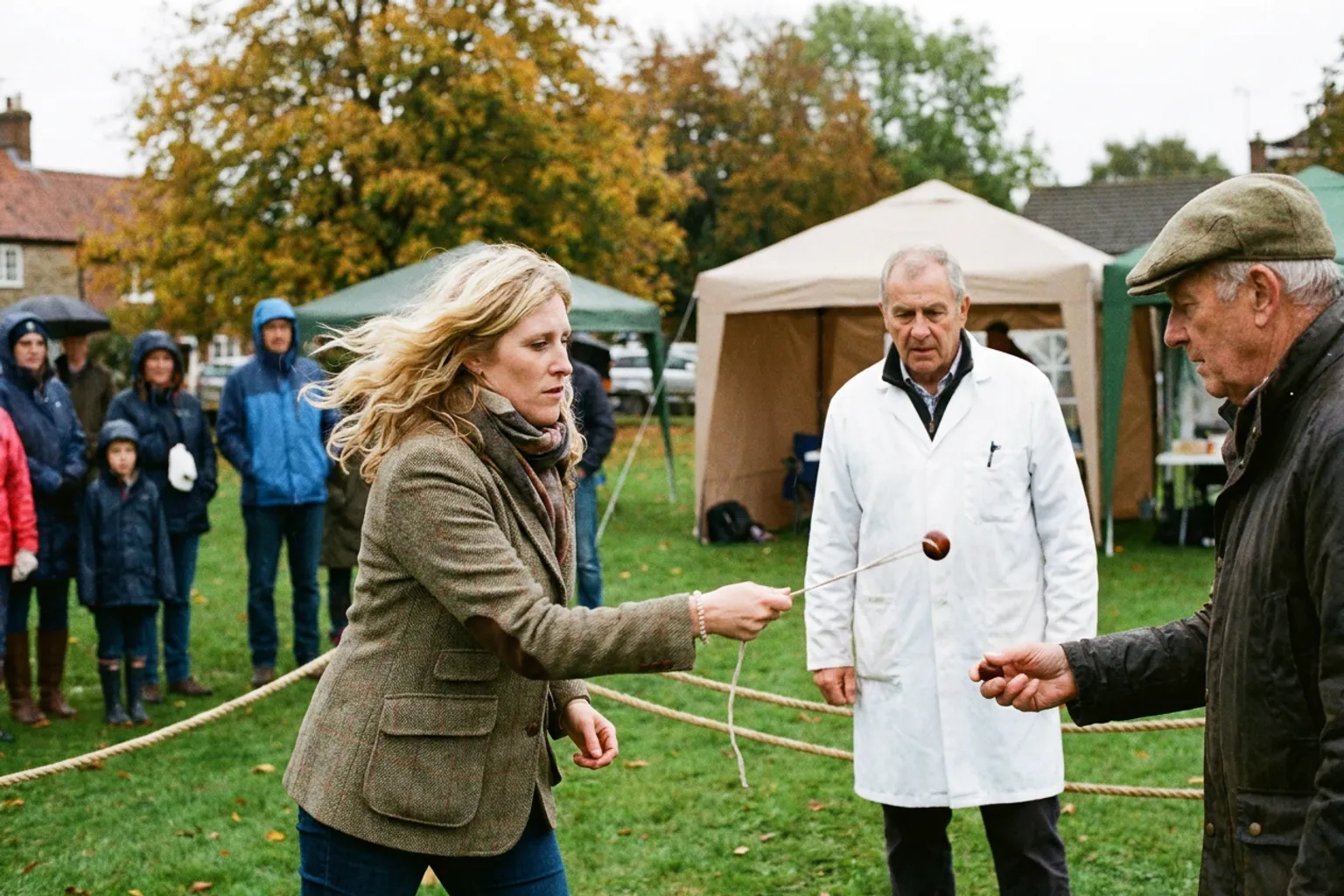
It is held on a green in Northamptonshire on the second Sunday in October, it raises money for charities supporting blind and partially sighted people, and there is an umpire in a white coat standing over every single pair of players.
I entered because a colleague had used the phrase “risk-averse” in a performance review the previous month, and I had gone home that evening and looked for the first thing I could find with an open entry list.
The rules are more elaborate than the game deserves. Twelve inches of lace, with at least eight inches between your hand and the nut. Three strikes each, in turn. If the strings tangle, the first player to shout “strings” gets an extra strike. After five minutes you go to a conker moot — three more strikes each, and if nothing has broken by then it is decided on clean hits.
Six weeks
I hardened conkers by four separate methods. Soaked in vinegar. Baked at a low oven for ninety minutes. Kept from the previous autumn in the airing cupboard. And a control group left in a bowl in the kitchen, because I wanted to know.
Forty-one conkers, in a shoebox, indexed on the lid in pencil.
The organisers supply the conkers. They are gathered locally, drilled and strung by the committee on the Saturday, and handed to you at the arena. You do not bring your own. It says so on the entry form, which I had read, in the way that you read a thing you have already decided about.
I went out in the second round to a man from Devon, in under two minutes, on a conker I had been given four minutes earlier and had no feelings about whatsoever.
The shoebox went in the green bin in November. I would like it on record that by then they were extremely hard.